
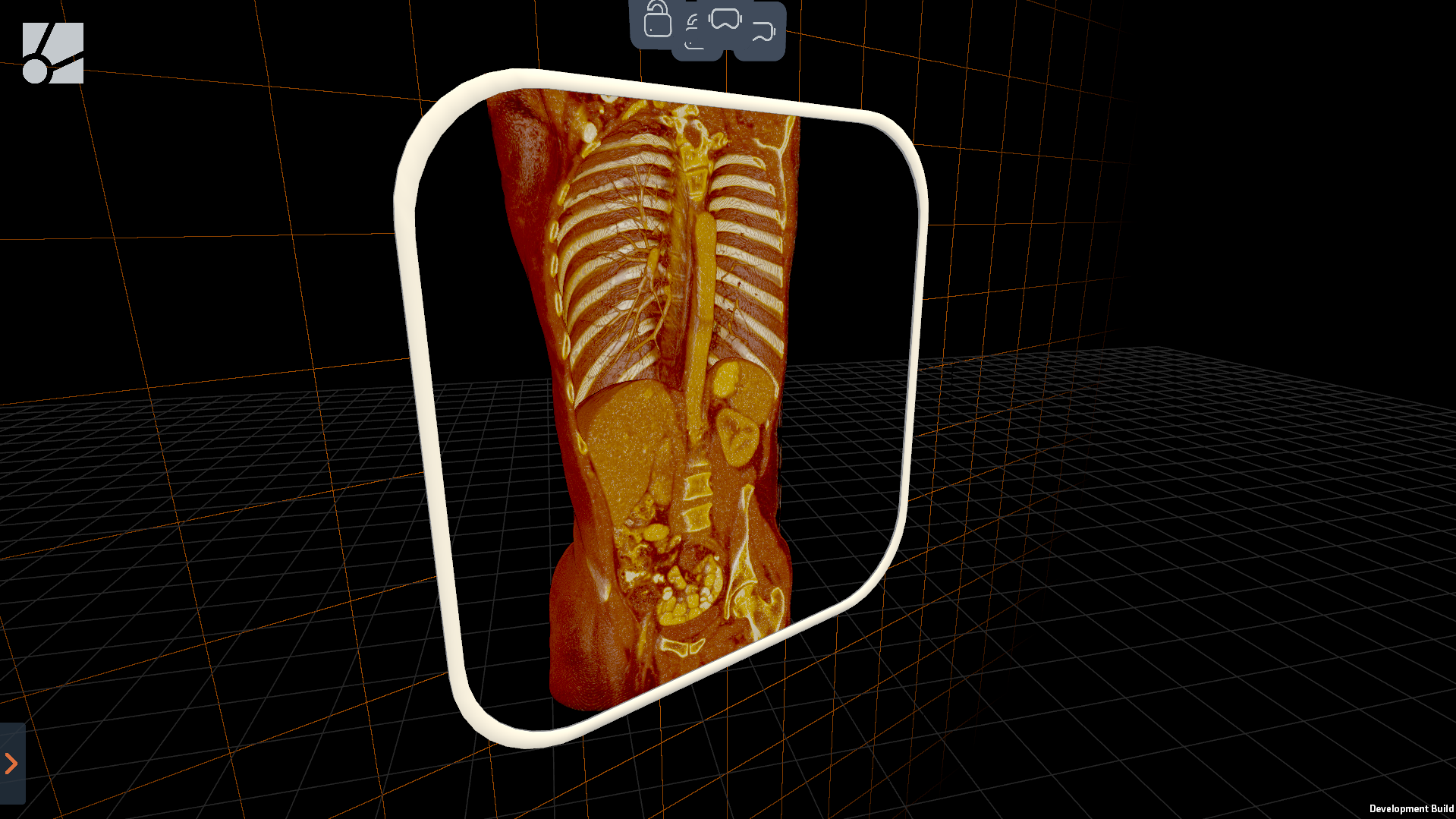
The development of three-dimensional visualization technology significantly affects the way of acquiring knowledge and practical skills in the field of medical sciences. 3D holograms allow interactive and realistic representation of anatomical structures, can increase understanding of complex relationships and processes in the human body. The use of technology in medical education is becoming more and more widespread, and its potential includes both academic training and the improvement of the competence of specialists.
The use of 3D holograms in medical education
The traditional model of medical education was dominated by textbooks, anatomical models, as well as two-dimensional images. Although these are tools that remain relevant, their limitations are increasingly evident. 3D holograms allow you to view structures from any perspective, enlarge them, as well as analyze layouts in different configurations. Thanks to this, it is possible to better assimilate knowledge in the field of anatomy and physiology, as well as easier to combine theory with practice. In academia, holographic technology allows you to conduct interactive classes in which participants can manipulate the image in real time. It's a way of working that can increase engagement and make learning more effective. The use of 3D holograms can also support the development of spatial thinking skills, which is crucial in medicine.Increasingly, elements of hybrid learning are also being introduced, in which traditional methods are combined with modern visualization tools, allowing the didactic process to be adapted to different learning styles and levels of advancement.
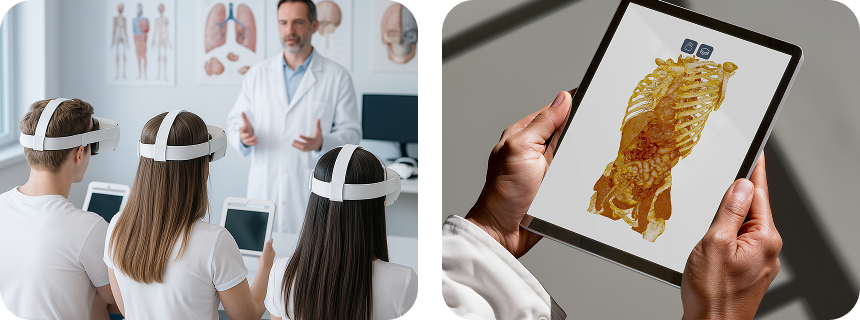
Holography - helping to develop skills in working with three-dimensional medical imaging
3D holograms allow visualization of anatomical structures by converting DICOM (computed tomography or magnetic resonance imaging) files into an interactive model for training purposes. It is worth remembering that developing the working skills of specialists with three-dimensional medical imaging is becoming a new standard both in Poland and in the world.
With the opportunity to explore 3D anatomical models on screen or with AR/VR goggles in the form of a hologram, specialists can demonstrate a more comprehensive approach to data analysis.
It is worth emphasizing that holograms can also support the communication process in the clinical team, since the three-dimensional image is readable not only for people with extensive experience, but also for those who are just gaining professional practice.
.png)
Development of competences through 3D visualization
The use of 3D holograms is not limited to learning theories or supporting data analysis. This technology allows you to simulate procedures, which can affect the development of practical skills. An interactive environment provides the ability to repeat specific scenarios many times, which can facilitate the improvement of techniques.
As a result, holography becomes a tool that not only supports understanding, but can also allow the shaping of experience in safe conditions. The use of 3D visualization means that new training standards are gradually being created, which can be scaled to a larger group of audiences, without losing the quality of education.
HOLO vectors - innovative 3D visualization Platform
One of the tools enabling the use of holographic technology in medical education is the 3D visualization Platform by HOLO vectors. This solution allows imaging data to be converted into three-dimensional models that can be analyzed interactively. As a result, educational materials can become clearer and more engaging, and students are able to better understand spatial relationships and complex anatomical structures.
This product is intended for training and educational purposes. It is not a certified medical device.

